
Family Karate Classes in Brighton & Westminster
Most family activities involve one person doing something while the rest watch. This is one you do together: same class, same material, side by side.
Students train by rank — Beginner, Intermediate, Advanced, and Black Belt — not by age, so everyone works alongside others at their own level. Pre-Karate is our one age-specific class.
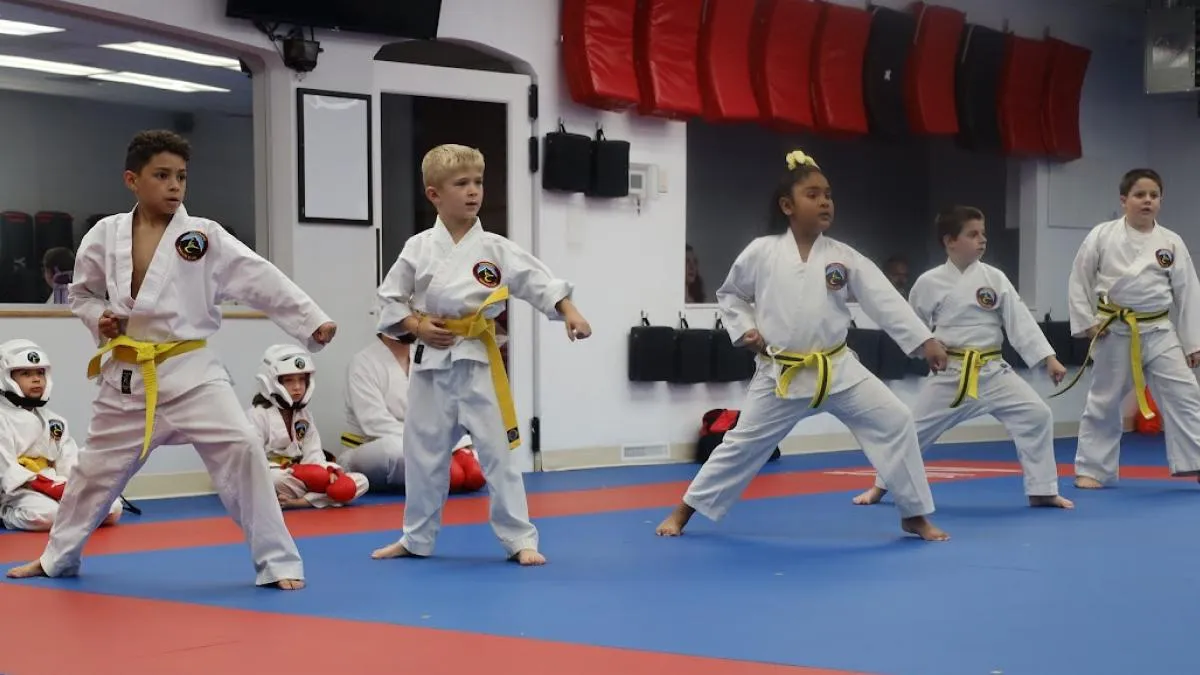
An activity you do together, not one you drive to
Most of what families sign children up for puts a parent on a folding chair for forty-five minutes. You are present, but you are not part of it, and the drive home is you asking how it went.
Karate here works differently, and it is not a marketing arrangement. It falls out of how the classes are organised. Students train by rank rather than by age, so a parent and their children can be on the same mat, learning the same material, at whatever level each of them has reached.
What that actually looks like
A family arrives from work and school, changes, and lines up together. During class each person works at their own rank. A parent might be drilling something their daughter passed six months ago, or the reverse.
Then everyone leaves having done the same hard thing on the same evening. The drive home is not an interview about someone else's hour. It is four people who were all there.
Why it holds a family together
It gives a family something in common that is not a screen, a schedule, or a chore. A shared vocabulary builds up: the name of a stance, who is testing next, what somebody finally got right tonight. It carries past the dojo doors.
It also puts parents and children in the same position for once: both learning something difficult, both occasionally bad at it, both improving. Children see a parent being corrected and trying again. That is worth more than being told to persevere.
How ages fit together
Children aged 3 to 5 train in Pre-Karate, which is its own class. The gap between a four year old and an adult is too wide for one room to serve both well.
From roughly age 6, everyone is in the same class structure, working at their own rank. That is what makes a parent, a teenager and a younger child training on the same evening straightforward rather than a special arrangement.
Belts, testing and shared goals
Beginners test for promotion every two months, so a family that starts together tends to move up on a similar rhythm. Higher ranks are promoted on individual progress, and families naturally spread out over time, which turns out to be its own kind of good, because the more experienced ones start helping the newer ones.
The club runs two in-house tournaments each year. Entering is optional, but they are the events families tend to show up for together whether or not everyone is competing.
What it costs, and what is included
Membership is per student. The one-time registration fee covers each person's uniform (gi), required protective equipment, belt testing, both in-house tournaments and seminars, so a family is not buying equipment separately for each child through the year.
We will go through the details for however many people are training at your free introductory session.
Where and when families train
Both dojos train Monday through Thursday. Brighton has been on South Main Street since 2005; Westminster opened on West 80th Avenue in 2020.
The youngest students train first and the ranks progress through the evening, so a family with a wide age range should look at the schedule for their location to see which evenings line up best.